
Two days ago, the UN General Assembly approved a draft resolution endorsing the “New York Declaration.” The resolution, which addresses achieving a peaceful settlement of the Palestinian question and advancing the two-state solution, passed with 142 votes in favor, 10 against, and 12 abstentions.
Despite the attempts of the New York Peace Conference on Gaza to revive international momentum toward ending the war and reintroducing the two-state solution, the initiative raised serious doubts about its feasibility and its ability to overcome the obstacles that have hindered progress for over three decades since the signing of the Oslo Accords in 1993 — a time when chances for success were arguably better than today.
The high-level International Conference for the Peaceful Settlement of the Question of Palestine and the Implementation of the Two-State Solution was held in New York at the end of July 2025. The United States and Israel rejected the conference. However, 17 countries — including Egypt, Saudi Arabia, Qatar, Canada, France, and the United Kingdom — signed the New York Declaration, which calls for ending Hamas’ rule in Gaza, a ceasefire, and establishing an independent Palestinian state.
The UK, Canada, and France announced their intention to recognize Palestine during the upcoming UN General Assembly meetings in this September, under certain conditions — including that the Palestinian state be demilitarized and that Hamas must not be allowed to participate in upcoming elections.
While Israeli Prime Minister Benjamin Netanyahu described the recognition of a Palestinian state as a reward to Hamas, UN Secretary-General António Guterres countered by saying “Statehood for the Palestinians is a right, not a reward. And the denial of statehood would be a gift to extremists everywhere.”
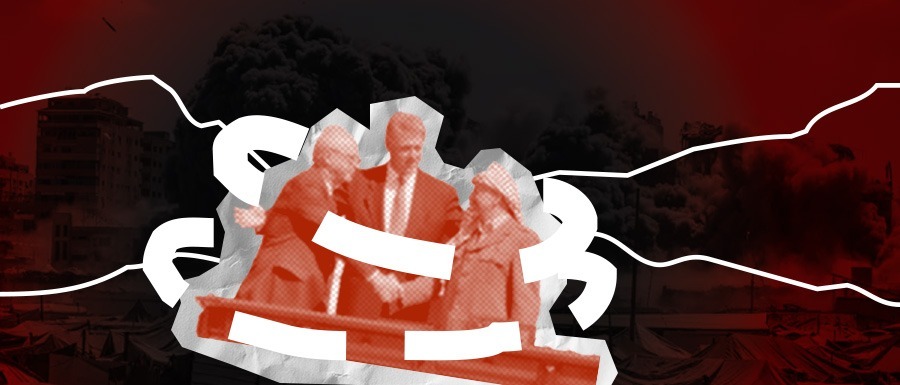
The concept of a two-state solution dates back to before the establishment of the State of Israel in 1948, but it only became a serious part of negotiations with the secret Oslo talks, which led to the signing of the Declaration of Principles between the Palestine Liberation Organization (PLO) and Israel, under American sponsorship. This agreement also advocated for a lasting peace through a two-state solution.
As the genocide continues into its second year and international actors attempt to revive the idea of two states, Today marks the 32nd anniversary of the signing of the Oslo Accords. One of the key provisions of Oslo was to establish Palestinian self-rule in the West Bank and Gaza Strip, though it made no clear promise of a fully independent state. The accords also called for Israeli withdrawal from Gaza and Jericho. But decades later, what has changed? And are there any new regional dynamics that might make the two-state proposal viable again?
After Oslo, Netanyahu — then the head of Likud — described the accords as a miskate. He repeated this sentiment after the October 7 attacks. He blamed Oslo for creating the political and security environment that enabled the attack and vowed not to repeat what he sees as its mistakes. Netanyahu insists the current war will continue until Israel eliminates Hamas and frees all hostages.
Amid growing right-wing influence in Israeli politics, Itamar Ben-Gvir — the resigned Minister of National Security — submitted a bill to the Knesset in March 2025 to repeal the Oslo Accords. On X, he wrote: “We are correcting a long-standing injustice. Alongside my colleagues from the Otzma Yehudit party, I submitted a bill aimed at repealing the Oslo Accords, the Hebron Agreement, and the Wye River Memorandum.”
With Israel’s dominant political right long rejecting Oslo, and Hamas having opposed the agreement from the start — it’s difficult to see how either side would agree to a similar peace initiative now. Hamas was never part of Oslo and is unlikely to accept demands to disarm or dissolve; it would see such conditions as an Israeli victory and an unacceptable concession.
There are currently no realistic developments that suggest meaningful negotiations on a permanent peace or the implementation of the two-state solution are feasible. Key actors on both sides — Hamas on one side, and Israel and the United States on the other — refuse to come to the negotiating table.
If Oslo collapsed despite mutual agreement at the time — with the Israeli government and the PLO as the recognized representative of the Palestinians — then attempting to revive the same concept now, without consent from the main actors and without mechanisms to hold Israel accountable to international law, is like tilting at windmills.
Moreover, the New York Declaration lacks any serious enforcement tools or guarantees to impose the will of the international community on Israel. It is a political statement without legal weight and was boycotted by the key stakeholders. Its insistence on the complete political and military dismantling of Hamas as a precondition for any peace process renders it unrealistic.
Looking back, Israel has repeatedly violated many of the Oslo Accords’ key provisions over the past Three decades, which is now effectively defunct, albeit without an official declaration. Palestinian President Mahmoud Abbas has threatened several times to cancel the agreement.
Among the most significant violations has been the continuation and expansion of Israeli settlements, which were supposed to stop. Yet, the number of settlers in Jerusalem and the West Bank has raised — including in cities like Hebron and Ramallah. Instead of freezing settlements, Israel escalated them. It also continued raids into areas fully under Palestinian Authority control, practiced administrative detention against Palestinians, imposed severe movement restrictions, and eventually built the separation wall after 2002.
The New York Declaration’s two-state proposal appears to be a rebranded version of Oslo — one likely to fail under the same pressures: Israel’s military dominance, imbalance of power, the absence of key actors from negotiations, the lack of legal or enforcement mechanisms, and no realistic or time-bound implementation plan.
Meanwhile, Israel continues its war to achieve the goals Netanyahu declared — goals that appear to be expanding — and continues annexing Palestinian lands and expanding settlements, with no realistic solution in sight to end the conflict.