By: Mohamed El-Tayar– Syrian Musician
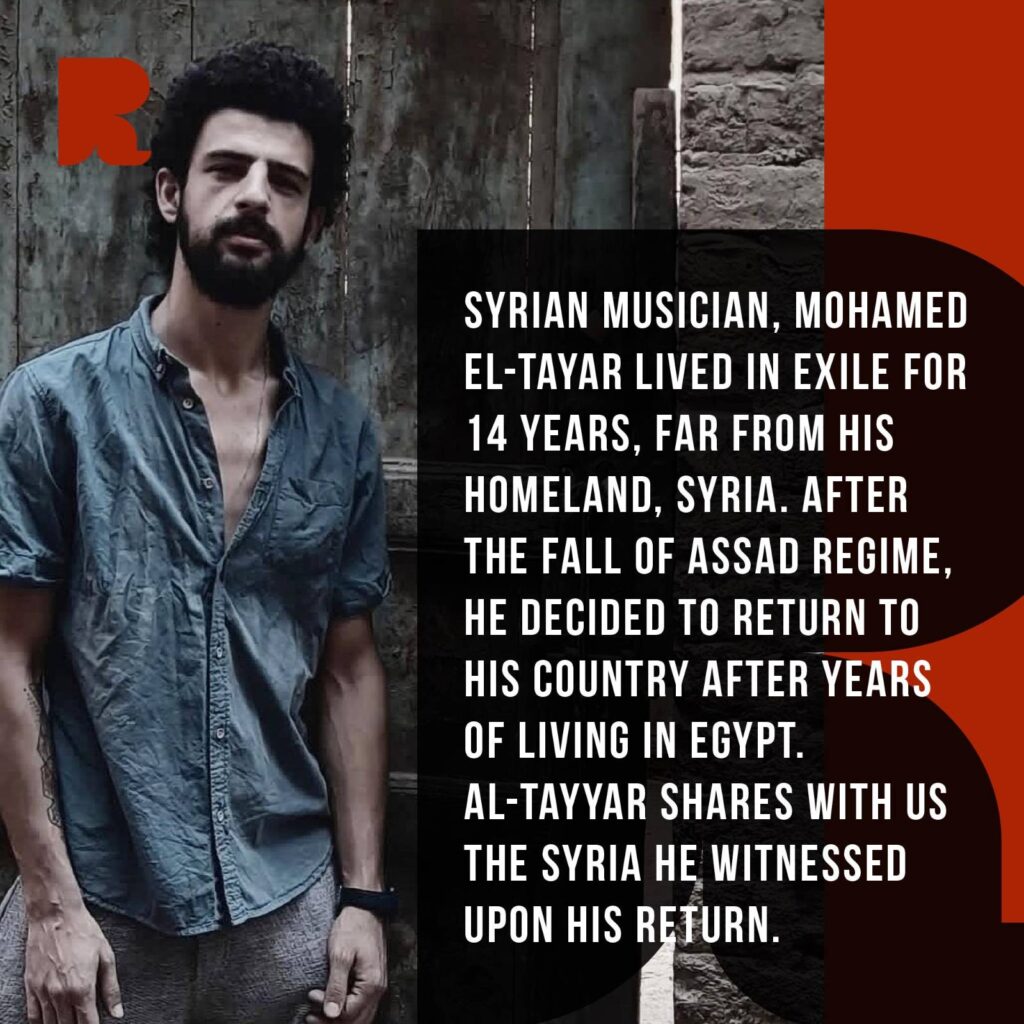
“Syrian musician Mohamed El-Tayar lived in exile for 14 years, far from his homeland, Syria. After the fall of Assad regime, he decided to return to his country after years of living in Egypt. Al-Tayyar shares with us the Syria he witnessed upon his return.”
I had been waiting for the defining moment of my life—the moment my country would be free and my right to live would be restored after 14 years of forced displacement. A journey filled with mixed emotions and an undying hope. When I realized I could return, it felt like a new birth. A single moment was enough to change all my plans and grant me the chance to rediscover myself, free from the fear, oppression, and cruelty that my entire people had endured. I believe that the Syrian cause was never just a temporary war but a systematic attempt to alter identity and belonging while instilling hatred toward the idea of return. The goal was clear: to destroy the country’s demographic and cultural fabric and make it feel foreign to its own people.
On the first day, I felt victorious. But the decision to return was filled with questions and contradictions—was it the right thing to do? My decision was fueled by a deep belief in freedom and a desire to experience this victory within my homeland rather than watching it from the outside. Returning was not an emotional decision but a fateful one—an expression of my belonging and my desire to revive the culture and feelings that had been buried by years of displacement. I knew it would not be easy. Living in another country had been an illusion I learned to resist, but the fear of not belonging never left me.
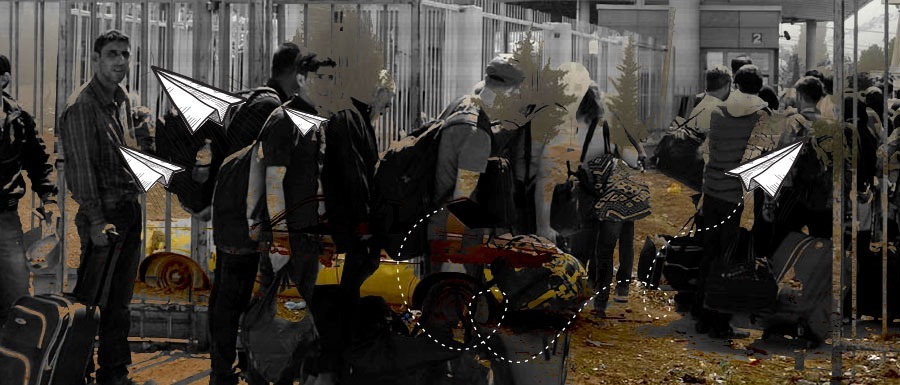
Between hope and fear, the journey back to Syria was long—from airport to airport, from bus to bus. Yet for me, it was filled with a sense of safety, longing, and excitement for the little details waiting for me. I kept thinking about the moment I would reunite with my family, embrace my land, and see my country without its oppressor. Would my perspective change? They had always tried to plant hatred for our homeland in our hearts.
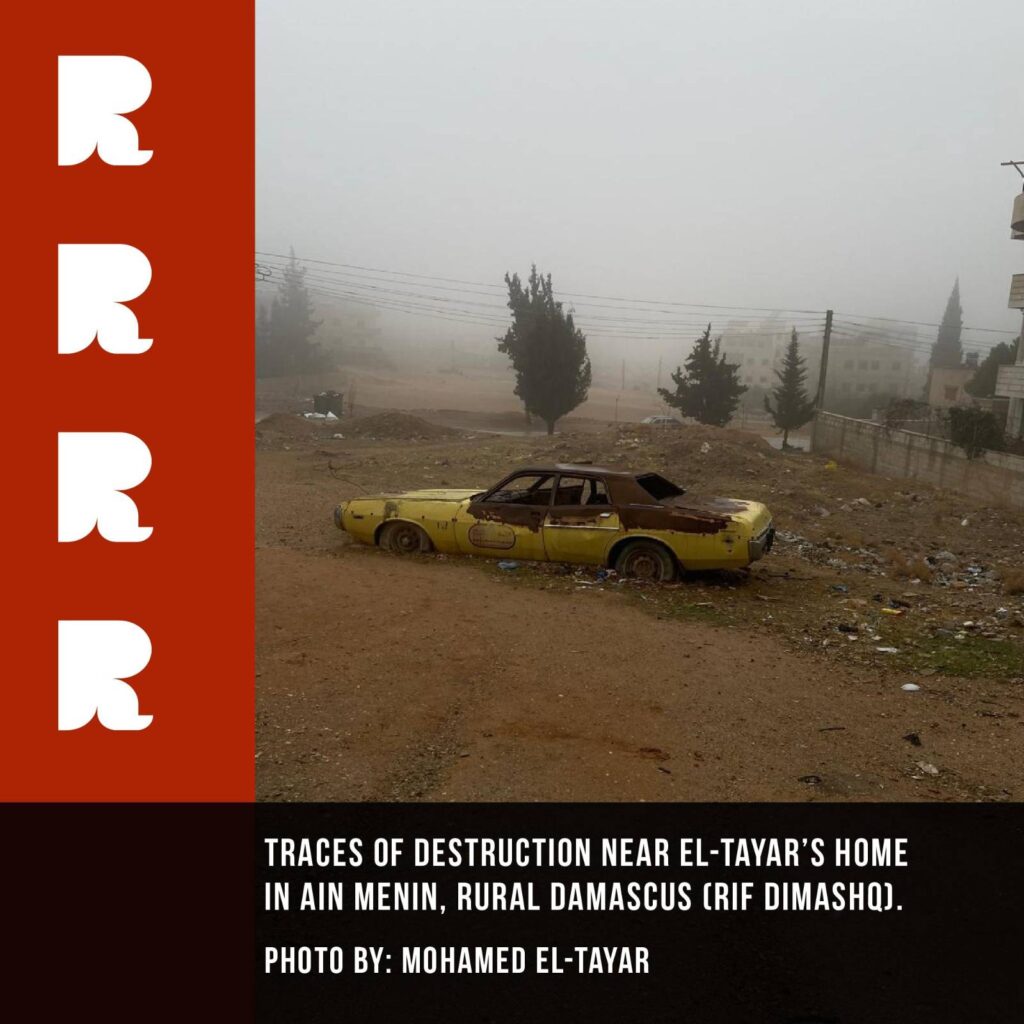
When I finally arrived in Syria, everything was different. The streets were destroyed, the places I once knew were unrecognizable, the roads were empty, and military vehicles lined the sides. I continued on, despite these heartbreaking scenes, toward Damascus—the city that once symbolized life. In Damascus, the scene was different; the intense crowds in the streets suggested that Syrians were trying to breathe freedom in any way they could. In that moment, I felt an overwhelming mix of joy, sadness, and anxiety.
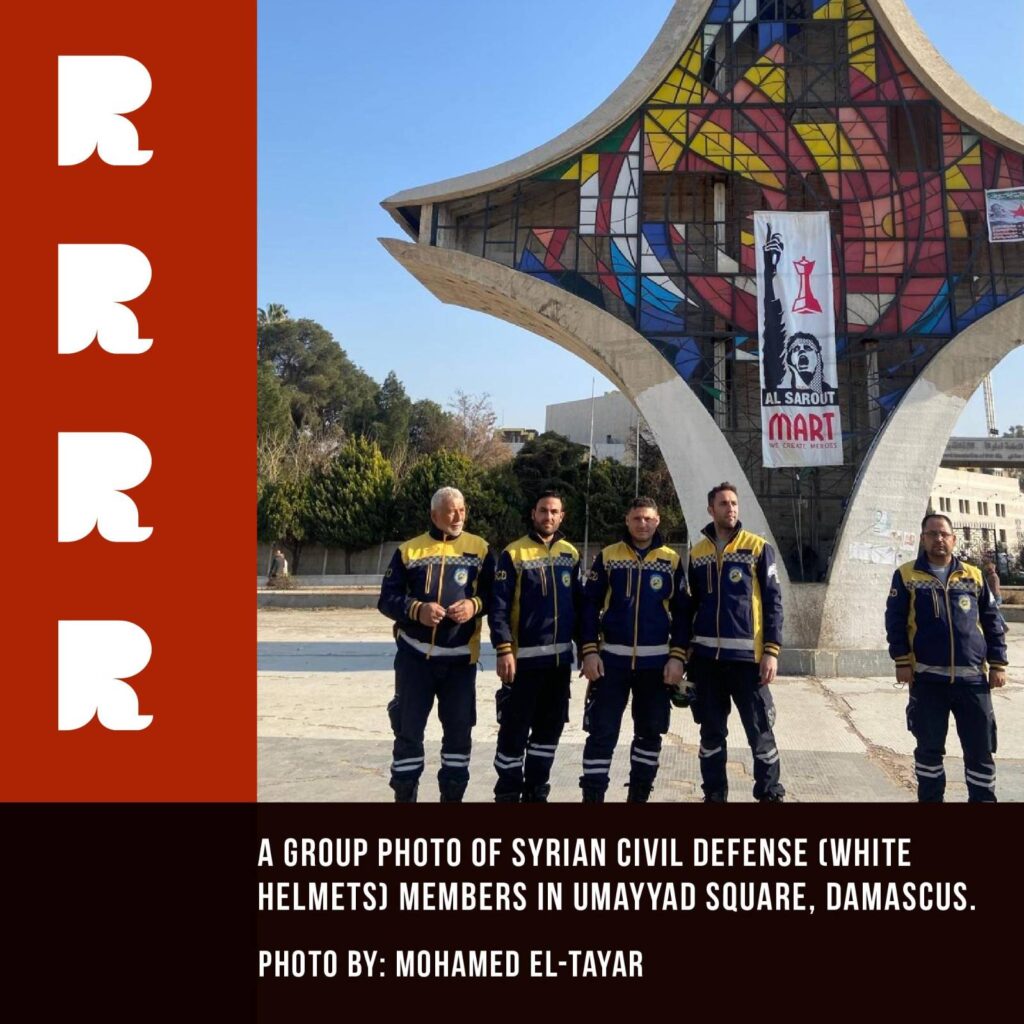
I visited places that had witnessed our first protests—places destroyed by Bashar Al-Assad’s bombings. Standing there brought back terrifying memories. The struggle between past and present began immediately. I realized that my culture had changed, and my view of life had expanded beyond the limits of my shattered homeland. I asked myself: Have I lost my full sense of belonging? Even my accent felt foreign in the streets!
I feared the changes and the burdens I carried from exile. I asked myself, in disbelief and anticipation—can we truly live freely? Or will corruption and hunger continue to destroy the Syrian people? I feared repeating past mistakes, the failure to respect the dignity of the people we sacrificed for, the internal divisions within society, the loss of the revolution’s goals, and the fleeting excitement of victory.
I have returned to the small details that bring me happiness and contentment. I now understand what occupation means and what victory means. I have learned how to reconcile with memories of fear and intimidation. Victory was worth the wounds we had endured for years. Returning to Syria was not just about coming back to my homeland; it was a return to myself, my identity, and the dream of freedom that we fought for. Today, I can love my country despite all the pain. I believe that true victory begins with reconciling with the past and striving to understand what we want. We must ask ourselves how to rebuild our homeland and how to honor the souls of those who sacrificed for our freedom.